

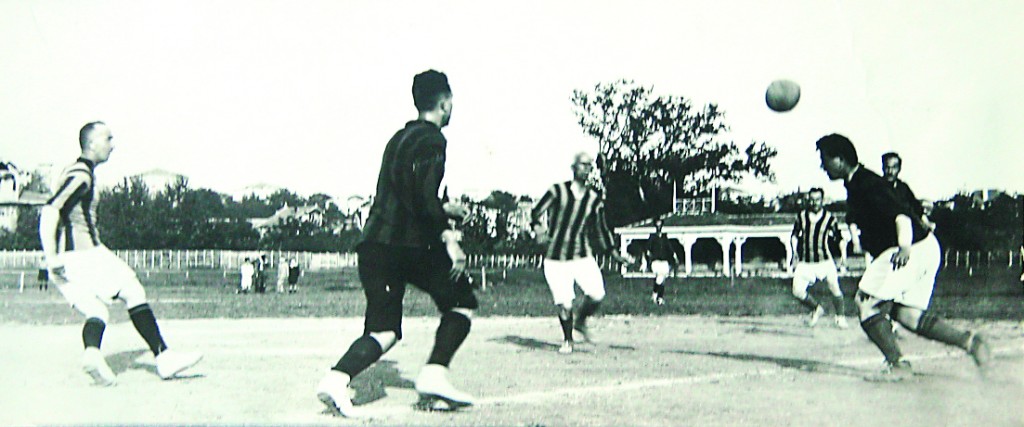
Football is the most popular sport on the planet, played and watched by billions. But the modern game we know today is the result of centuries of evolution from far rougher and more chaotic origins.
Ancient and Folk Origins
Ball games involving kicking date back to the ancient world, from China's "cuju" to games played in Greece and Rome. In medieval Europe, "folk football" took hold — vast, rule-light contests between villages that could involve hundreds of players and few boundaries beyond the landscape itself.
The Laws of the Game
The decisive moment came in 1863, when representatives of English clubs met in London to form the Football Association and agree a single set of rules. Standardising the laws — including banning the carrying of the ball — split football (soccer) from rugby and gave the sport a common framework for the first time.
Going Global
From Britain the game spread rapidly through trade, education and empire, taking root across Europe and South America. FIFA was founded in 1904 to govern the international game, and the first FIFA World Cup was staged in Uruguay in 1930 — giving football its global showpiece.
Professionalism and Competition
Domestic leagues and cup competitions professionalised the sport through the 20th century. European club competition, launched in the 1950s, eventually grew into the Champions League, while national leagues across the world developed passionate followings of their own.
The Modern Era
Television, sponsorship and global stars turned football into a multi-billion-dollar industry. Players became worldwide icons, transfer fees soared, and the World Cup grew into one of the most-watched events on Earth. Technology such as VAR and goal-line systems has since reshaped how the game is officiated.
Why It Endures
For all the money and modernisation, football's appeal remains rooted in the same simplicity that made those village games so popular: a ball, two goals, and the fact that anyone, anywhere, can play.
The Split Between Football and Rugby
The 1863 meeting did not simply create one set of rules; it forced a lasting divide. Clubs disagreed over whether players should be allowed to handle and carry the ball and to tackle opponents physically. Those who favoured a handling, running game went on to develop rugby football, while those who backed a kicking, dribbling game formed the basis of association football. The word soccer itself comes from an abbreviation of association. From that point the two codes grew as separate sports, each with its own governing body, traditions and following.
The Football League and Early Professionalism
Codified rules created a need for regular, organised competition. Cup tournaments came first, but clubs soon wanted a fixed programme of league fixtures to sustain interest across a season. The formation of league football in England during the late nineteenth century gave the sport a template that was copied around the world. It also brought a fierce debate about payment. Early football prized amateur ideals, yet leading clubs increasingly paid their best players, and professionalism was eventually accepted rather than outlawed. That acceptance allowed clubs to attract talent, charge admission and build the supporter culture that still defines the game.
The Growth of International and Continental Competition
As football spread, national teams and clubs sought to test themselves beyond their own borders. The World Cup gradually expanded from a modest gathering of nations into a tournament reached through qualifying campaigns on every continent. Alongside it, regional confederations organised their own championships for national teams and clubs, giving the calendar a steady rhythm of domestic, continental and global competition. This layering of tournaments is one reason football sustains attention almost year-round, with something meaningful nearly always at stake somewhere in the world.
More Than a Game: Football and Culture
Football's reach extends far beyond the pitch. Clubs are woven into the identity of towns and cities, passed down through families and tied to local pride. Major matches can bring entire nations to a standstill, and the sport has long served as a stage for expressions of community, rivalry and belonging. It has also reflected wider social change, opening up over time to broader participation and reaching audiences who may never attend a match in person. That cultural weight, as much as the action itself, helps explain the game's enduring hold.
Frequently Asked Questions
When were the rules of football created?
In 1863, when the Football Association was formed in England.
When was the first World Cup?
In 1930, hosted and won by Uruguay.
Key Takeaways
- Football evolved from chaotic medieval folk games into a codified sport in 1863.
- FIFA (1904) and the first World Cup (1930) globalised the game.
- Its enduring appeal lies in its fundamental simplicity.