Scoring at a World Cup writes a player into football folklore. Doing it repeatedly, across multiple tournaments, is what separates the legends from the rest. Here are the deadliest finishers in the history of the competition.
Update, 18 October 2026: this list was first published before the 2026 World Cup, when Miroslav Klose's 16 goals was the record. Kylian Mbappé and Lionel Messi both passed him during the tournament, and the article has been rewritten to reflect the new order.
The All-Time Leader: Kylian Mbappé (22)
France's Kylian Mbappé came into the 2026 tournament with 12 World Cup goals and left with 22. His 10 goals in eight matches won him the Golden Boot for the second tournament running, which no player had done before. He took the record outright with two goals against England in the third-place play-off, which France lost 6–4. He has played 22 World Cup matches, one goal per game, across 2018, 2022 and 2026.
The Chasing Pack
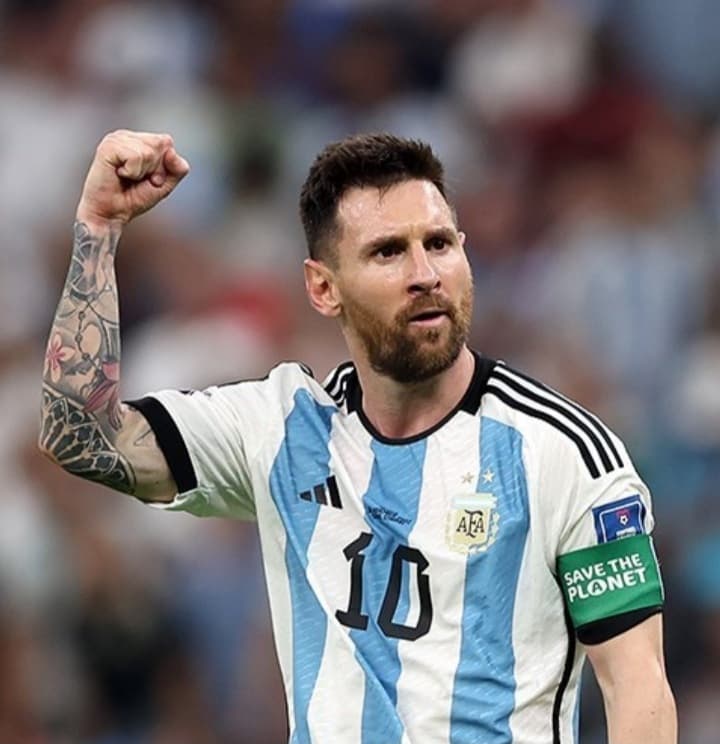
- Lionel Messi (Argentina) — 21: he scored eight times in 2026 and led Argentina to the final. He announced his retirement from international football on 31 August 2026, so 21 is his final total.
- Miroslav Klose (Germany) — 16: the record holder from 2014 until 2026, with goals across four tournaments from 2002 to 2014.
- Ronaldo (Brazil) — 15: the original "R9", a two-time World Cup winner who held the record before Klose.
- Gerd Müller (Germany) — 14: a ruthless poacher who set the bar at the 1970 and 1974 tournaments.
- Just Fontaine (France) — 13: astonishingly, all in a single tournament (1958) — a single-edition record that still stands.
- Pelé (Brazil) — 12: a three-time champion whose tally came largely as a teenager and young man.
Golden Boot vs All-Time Tally
It is worth distinguishing two things: the Golden Boot goes to the top scorer at a single tournament, while the all-time list rewards sustained excellence across many. Fontaine's 13 in one tournament is still the single-edition record. Mbappé's 10 in 2026 came close, but he needed eight matches to Fontaine's six.
Can Anyone Catch Mbappé?
Mbappé will be 31 at the 2030 World Cup, so he is well placed to add to his total. Messi, the only player within touching distance, has retired from international football. The next three names on the list, Klose, Ronaldo and Müller, are long retired.
Why the Record Stood So Long
Klose's 16 lasted 12 years. Reaching the summit requires more than finishing ability: it demands the longevity to appear at three or four World Cups and the form to score in each. Mbappé reached 22 in only three tournaments, which shows how unusual his record is.
What It Takes to Climb the List
Topping the all-time World Cup scoring charts is as much about endurance as finishing. A player must remain fit, in form and part of a qualifying nation across three or four tournaments spread over a dozen years or more. That requires avoiding serious injury at four-year intervals, maintaining peak sharpness deep into a career, and playing for a country good enough to keep reaching the finals. It is the combination of talent and longevity — not goals alone — that separates the record holders from the merely prolific.
A Changing Tournament
The nature of the competition has shifted over the decades, and that shapes the record books. Early World Cups involved fewer teams and fewer matches, so even the most lethal forwards had limited opportunities. As the tournament expanded and deep runs came to involve more games, later players gained more chances to add to their tallies. Comparing scorers across eras therefore means weighing not just ability but the very different structures they played within.
Poachers and Complete Forwards
The great World Cup scorers have arrived in different guises. Some were classic poachers — specialists in and around the six-yard box whose instinct for the right position turned half-chances into goals. Others were complete forwards who dropped deep, created for teammates and scored from range as well as close in. Both types populate the top of the list, a reminder that there is no single blueprint for scoring at the highest level; ruthless efficiency and all-round brilliance have each proved capable of piling up goals.
How Modern Formats Could Reshape the Records
The expansion of the World Cup to 48 teams from 2026 added a knockout round, so the teams that go furthest now play eight matches instead of seven. The first 48-team tournament showed the effect straight away: both Mbappé and Messi passed Klose's 16 in 2026, and both their teams played eight matches.
Frequently Asked Questions
Who has scored the most World Cup goals ever?
Kylian Mbappé of France, with 22 goals. He passed Lionel Messi (21) at the 2026 tournament.
Who scored the most goals in a single World Cup?
Just Fontaine of France, with 13 at the 1958 tournament.
Who won the 2026 Golden Boot?
Kylian Mbappé, with 10 goals. He also won it in 2022, the first player to win it at consecutive tournaments.
Key Takeaways
- Mbappé (22) leads the all-time list, ahead of Messi (21) and Klose (16).
- Fontaine still holds the single-tournament record (13).
- Messi's total is final after his international retirement; Mbappé could add more in 2030.