
Basketball is one of the world's most popular sports, played everywhere from Olympic arenas to school playgrounds and neighbourhood courts. Yet if you are new to the game, the flurry of dribbling, whistles and rapid scoring can look bewildering. This beginner's guide breaks down where basketball came from, how a match is structured, the rules that govern play and the terms you will hear commentators use. By the end you should be able to follow a game with confidence and understand why players do what they do.
Where Basketball Came From
Basketball was invented in 1891 by Dr James Naismith, a Canadian physical education instructor working in Springfield, Massachusetts. Tasked with devising an indoor activity to keep students active through the winter, he nailed a peach basket to a balcony and wrote down thirteen simple rules. The idea caught on quickly, spread through schools and colleges, and grew into the fast, athletic global sport we know today. The peach baskets are long gone, but the core aim has never changed.
The Objective and the Teams
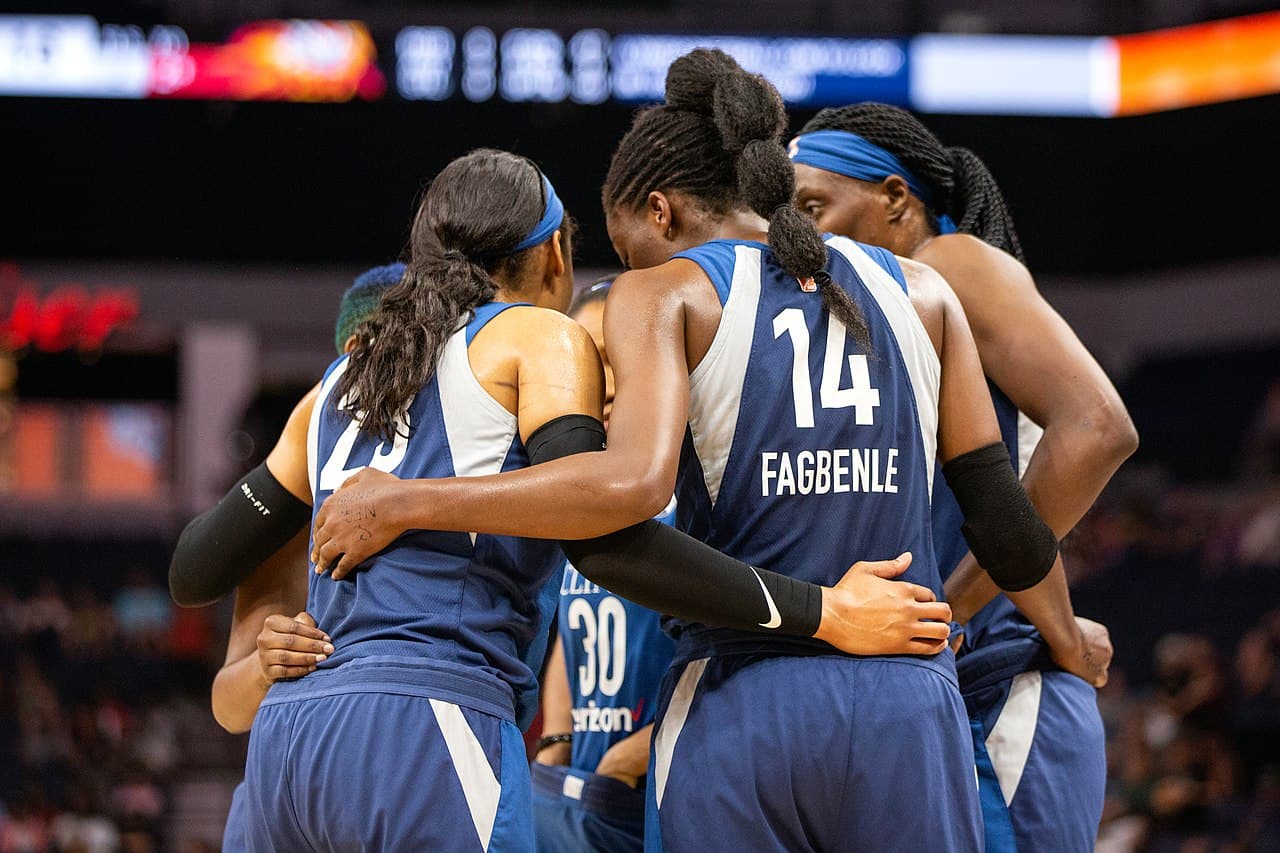
The goal is simple: score more points than your opponent by putting the ball through the raised hoop, while stopping the other side from doing the same. Each team fields five players on the court at a time, with substitutes available from the bench. Teams move the ball by dribbling (bouncing it) or passing, and only a player in control of the ball may attempt to score. Because you cannot run while holding the ball, teamwork, movement and quick decision-making matter as much as individual skill.
The Court and the Hoop
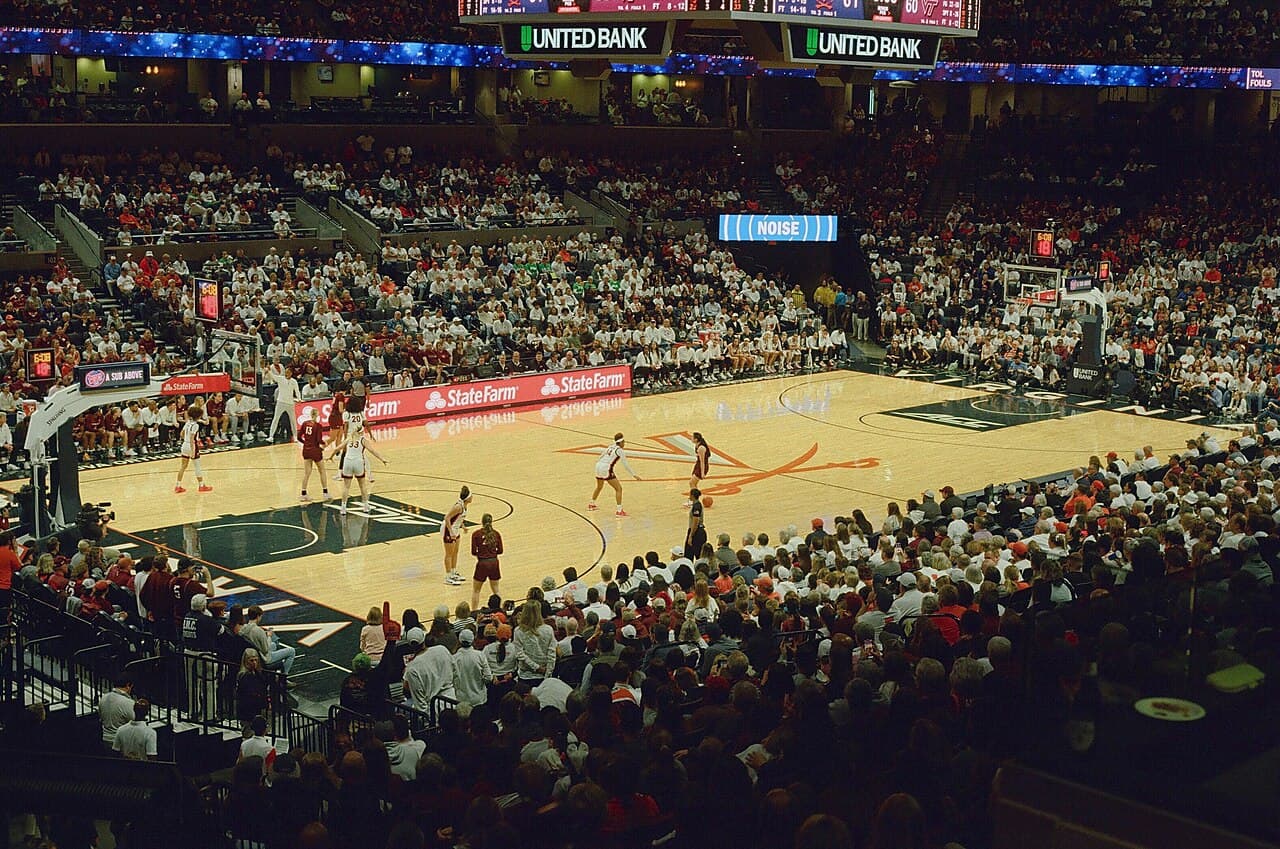
A basketball court is a rectangular hard surface with a hoop mounted at each end. The rim sits 10 feet (3.05 metres) above the floor, attached to a backboard. A few key markings shape how the game is played:
- The three-point arc, a curved line beyond which successful shots are worth more.
- The free-throw line, where players shoot uncontested after certain fouls.
- The key (also called the paint or lane), the painted rectangle beneath each hoop where special rules apply.
How Scoring Works
Points are earned in three ways. A field goal made from inside the three-point arc is worth 2 points. A shot made from beyond that arc counts for 3 points. A free throw, taken from the free-throw line after certain fouls, is worth 1 point. This scoring system rewards both accuracy from distance and the ability to attack the basket, which is why modern teams value long-range shooting so highly.
Positions, Old and New
Traditionally, the five roles are the point guard (the playmaker who directs the offence), the shooting guard (often a strong scorer), the small forward (a versatile all-rounder), the power forward and the centre (typically the tallest players, working near the basket). In the modern game these lines are increasingly blurred. Tall players are now expected to shoot from range, guards defend bigger opponents, and coaches favour flexible line-ups over rigid roles. You will often hear the term positionless basketball to describe this shift.
Game Flow and Key Rules
A match is split into timed periods. The number and length vary by competition: professional leagues and international basketball generally play four quarters, though the quarter length differs between the NBA and FIBA, and college games in the United States are often structured into two halves. The clock stops frequently for fouls, time-outs and the ball going out of play, so real time far exceeds the playing time. Teams take turns in possession, and a shot clock forces the attacking side to attempt a shot within a set number of seconds, keeping the game brisk.
Several common violations keep play fair. Learning these will help you understand the referee's whistle:
- Travelling: moving your feet illegally without dribbling the ball.
- Double dribble: dribbling, stopping, then dribbling again, or bouncing the ball with both hands.
- Backcourt: taking the ball back over the halfway line once your team has advanced it.
- Three seconds: an attacking player lingering too long in the key.
- Shot-clock violation: failing to shoot before the shot clock expires.
Physical contact is policed through fouls. A defender who makes illegal contact concedes a foul, which may hand the opponent free throws or possession. Crucially, a player who commits too many fouls is disqualified for the rest of the game, known as fouling out. The exact limit differs between leagues, so it is one of those numbers worth checking for the competition you are watching.
Frequently Asked Questions
How long does a basketball game last?
Playing time depends on the competition, but because the clock stops so often for fouls, time-outs and stoppages, a match usually takes well over an hour of real time to complete, and often closer to two hours with breaks.
What is the difference between the NBA, FIBA and college basketball?
The NBA is the leading professional league in the United States, FIBA governs international and Olympic competition worldwide, and college basketball is the amateur game played at American universities. They share the same fundamentals but differ in details such as period length, court markings and some rules.
Why are some shots worth three points?
Shots taken from beyond the three-point arc are harder because they are further from the basket, so they are rewarded with an extra point. This encourages accurate long-range shooting and has reshaped how modern teams attack.
Key Takeaways
- Basketball was invented in 1891 by Dr James Naismith and is played by two teams of five aiming to score through a hoop set 10 feet (3.05 m) high.
- Shots are worth 2 points inside the arc, 3 beyond it and 1 per free throw.
- Violations such as travelling, double dribble and shot-clock breaches keep the game flowing fairly, while too many fouls sees a player fouled out.
- Core rules are shared across the NBA, FIBA and college basketball, but details like period length and foul limits differ by league.